A historic finca-cortijo for complete renovation in Casas del Señor, a small inland hamlet in the province of Alicante, close to the Font Almorquí natural area. The property stands on a 750 m² plot and includes a main house of approximately 200 m², two dilapidated barns and a former chapel, all dating from around 1970. The buildings currently have no water or electricity connection and require full refurbishment. The asking price is fixed at €40,000. Pinoso can be reached by car in about 10 minutes and Monóvar in about 15 minutes.
Within the regional portfolio, this finca occupies the entry-level segment of the market, positioned below coastal apartments in Pilar de la Horadada, tourist apartments in Finestrat and registered resale buildings in Torrevieja. The comparison is instructive because it highlights two entirely different products. The coastal alternatives offer turnkey homes with communal pools, sea proximity and rental potential, at prices well above this property. What they do not offer is land, volume and the freedom to design a home from the shell upward. The €40,000 asking price here buys 750 m² of land and roughly 200 m² of existing structure in an inland hamlet, with two barns and a former chapel as additional building volume. The total investment picture differs accordingly: the coastal buyer pays upfront in the purchase price, while the buyer of this finca pays in the renovation, the off-grid installations and the time the project demands. Location-wise, the interior of Alicante province around Pinoso and Monóvar trades coastal access for quiet, space and a lower cost base. The region itself has a working rural economy based on wine and marble, with steady local demand for country properties. For buyers whose priority is Mediterranean coastal lifestyle with services within walking distance, the coastal options fit better. For buyers seeking a restoration project, privacy and self-sufficient living at the lowest possible entry price, this property sits in a segment the coastal developments do not compete in. Adjacent houses referenced by the seller offer the possibility of extending the holding further, which is an option rarely available in apartment developments.
| Project Name | City | From price |
|---|---|---|
| APARTMENTS IN PILAR DE LA HORADADA | Pilar de la Horadada | € 99,900 |
| RIVIERA 1 - TOURIST APARTMENTS | Finestrat | € 147,312 |
| PANORAMA BEACH BUILDING RAICV Registered Agency | Torrevieja | € 155,000 |
Key characteristics of location, homes, project phase and points of attention.
The property lies in Casas del Señor, a rural hamlet in the interior of Alicante province, surrounded by unspoiled countryside near the Font Almorquí area. Pinoso is about 10 minutes away by car and Monóvar about 15 minutes, which is where daily shopping, schools and healthcare are concentrated. The location is inland; the coastal towns of the Costa Blanca are considerably further away.
The property functions as a blank canvas for self-sufficient rural living. The main house, two barns and former chapel can be converted into a permanent home or a holiday retreat. Buyers should expect a full renovation process, including the installation of off-grid solutions such as solar panels and a water reservoir, as no utility connections are currently present.
This is not a new-build project but an existing property dating from 1970, sold in key-ready legal terms yet physically requiring complete reconstruction. The buildings are currently ruined, as shown in the photographs. Any delivery or completion timeline depends entirely on the buyer's own renovation planning and permits, and all dates in that respect are indicative.
The property has no bedrooms or bathrooms in usable condition and no water or electricity connection. Full renovation is required before habitation is possible. It is an inland location without coastal proximity, public transport information is absent, and daily life depends on car travel to Pinoso or Monóvar. No community facilities, pool or garden amenities are present in the current state.
This property fits a specific buyer profile. It suits those with renovation experience or access to a local builder and architect, who can assess the state of the stone structures realistically before purchase. It also suits buyers seeking a self-sufficient rural project: the absence of grid connections is a given, and solutions such as solar power and a water deposit are part of the plan rather than an afterthought. The property works as a permanent home for people who want inland quiet within a short drive of town services, or as a holiday retreat for those who value nature and history over coastal proximity. It is less suitable for buyers seeking a move-in-ready home, rental income from tourism, or a location within walking distance of shops and restaurants. The total budget should include not only the €40,000 asking price but also construction costs, permits and off-grid installations. Buyers intending to extend the property with an adjacent house, as referenced by the seller, would combine multiple purchases. In short, this is a project for those with time, patience and a clear plan, rather than for anyone needing immediate housing.
In its current condition, the property has no finishing to speak of. The photographs show ruined stone buildings with rubble, collapsed sections and fencing around parts of the site. The main house dates from around 1970 and retains characteristic elements typical of the region's rural architecture, including stone walls and a traditional layout, but interiors are not usable. Before any finishing work can begin, structural assessment is needed: walls, roofs and foundations must be evaluated, and parts of the structure may require rebuilding. Technical installations are entirely absent. Electricity would typically be provided through an off-grid solar system with battery storage, and water through a reservoir or tanker delivery, both established practices in inland Alicante. Sewage would logically be handled through a septic system. The renovation therefore starts from the shell upward: new roofing, new floors, new plumbing and wiring, new windows and a full interior fit-out. The two barns and the former chapel offer additional volume that can either be restored or partially rebuilt, subject to local planning rules. Buyers should budget on the basis of a complete rebuild of the interior and verify with the local authority in Monóvar or Pinoso what is structurally and legally possible before committing.


The asking price is €40,000 and is a fixed price, not a starting price. For that amount, the buyer acquires the plot of 750 m² and the existing structures: the main house of approximately 200 m², two barns and the former chapel. It should be noted that this purchase price represents only part of the total investment; complete renovation, utility solutions and permits will add a substantial further cost that varies with the buyer's plans. Comparable homes in the regional portfolio are positioned above this property in price. Availability is immediate in principle, subject to the standard Spanish purchase process.
Casas del Señor is a small hamlet where daily life is quiet and dictated by the rhythm of the surrounding countryside. The property itself consists of a stone main house, two barns in poor condition and a former chapel, arranged on a 750 m² plot. In its current state, the buildings cannot be lived in: there is no water, no electricity and no functioning interior. What the property offers is volume and history. Roughly 200 m² of built structure forms the raw material for a restoration project, and the barns and chapel allow a layout with separate functions, such as guest accommodation, a workshop or storage. Living here after renovation would mean self-sufficiency to a significant degree. Water supply and energy would need to be arranged privately, for example through a reservoir and solar installation, solutions that are common in inland Spain. Daily shopping, medical appointments and social life take place in Pinoso, about 10 minutes away by car, or Monóvar, about 15 minutes. The surroundings are agricultural and natural, with mountain views and walking routes near the Font Almorquí area. Anyone considering this property should be comfortable with rural isolation, a renovation of at least a year in practice, and the organisational effort that off-grid living requires. In return, the setting offers silence, space and a degree of privacy that coastal developments cannot match.
Life around Casas del Señor is defined by agriculture and open countryside. The hamlet sits in the interior of Alicante province, between the wine towns of Pinoso and Monóvar, roughly 10 and 15 minutes away by car respectively. Both towns provide the full range of daily services: supermarkets, banks, schools, health centres, pharmacies and weekly markets. Monóvar is known for its Fondillón sweet wine and historic centre; Pinoso for its red wines, marble heritage and village atmosphere. The immediate surroundings of the property consist of fields, dry hills and the natural area near Font Almorquí, suitable for walking and cycling. A car is essential here; there is no practical public transport alternative for daily needs. The nearest coastal towns of the Costa Blanca lie significantly further afield, meaning beach trips require a planned drive. The trade-off is evident: quiet, dark night skies and a strong sense of space, in exchange for dependence on the car and distance from the coast.
The map shows the property's position in Casas del Señor, an inland hamlet west of Alicante city, with Pinoso roughly 10 minutes away by car and Monóvar about 15 minutes. The surrounding area is agricultural land and natural countryside near Font Almorquí, with the Costa Blanca coastline at a considerable distance to the south-east.

Approximate area · exact address shared on request
Casas del Señor occupies a modest position within the rural interior between Pinoso and Monóvar, in the north-west of Alicante province. Within the wider region, the area is characterised by wine growing, marble extraction and small-scale agriculture, and it lies clearly outside the coastal tourist belt of the Costa Blanca. For buyers comparing this property with coastal apartments in Pilar de la Horadada, Finestrat or Torrevieja, the contrast is fundamental: those offer turnkey seaside living at higher prices, while this finca offers land, volume and a restoration project inland at the lower end of the market.
Accessibility rests entirely on the road network. Pinoso is about 10 minutes away by car and Monóvar about 15 minutes, both offering supermarkets, healthcare and schools. Larger regional centres such as Elda, Sax and Villena connect onward to the A-31 motorway towards Alicante and Madrid. Alicante-Elche airport requires a longer inland journey; no reliable travel time is given here as it depends on the route chosen. There is no train station in the immediate vicinity and no regular bus service serving the hamlet, so a private car is a practical necessity. Within the hamlet itself, access to the property is via local rural roads. Parking is unrestricted given the plot size and rural setting.
The interior of Alicante province around Casas del Señor has a semi-arid Mediterranean climate: hot, dry summers and mild winters, with considerably less rainfall than the coast. The terrain consists of rolling hills and dry farmland at modest elevation, giving wide views over the surrounding countryside. Sun hours are high throughout the year, which is directly relevant here because an off-grid solar installation is the most logical energy solution for a property without a grid connection. Rainfall is limited and unevenly distributed, which is why a water reservoir or deposit forms part of the standard set-up for rural homes in this area. The natural environment near Font Almorquí supports walking, cycling and birdlife, and the low light pollution makes for clear night skies.
Source: Open-Meteo (2020–2025 average)
This is an inland property, and recreation is accordingly rural rather than coastal. There are no beaches within short range; a trip to the Costa Blanca coast requires a planned drive of considerable distance. Day-to-day leisure options consist of walking and cycling routes through the countryside around Font Almorquí, and the cultural life of the neighbouring towns. Pinoso and Monóvar both have restaurants serving regional dishes, bodegas producing local wines, and regular festivities. Monóvar's Fondillón wine and Pinoso's red wines and marble tradition form part of the local identity. Golf courses and coastal water sports are not part of the immediate environment and would be occasional excursions rather than daily options.
Source: OpenStreetMap
Ref: VL648039
Source: Wikipedia, Wikidata, INE, Junta de Andalucía
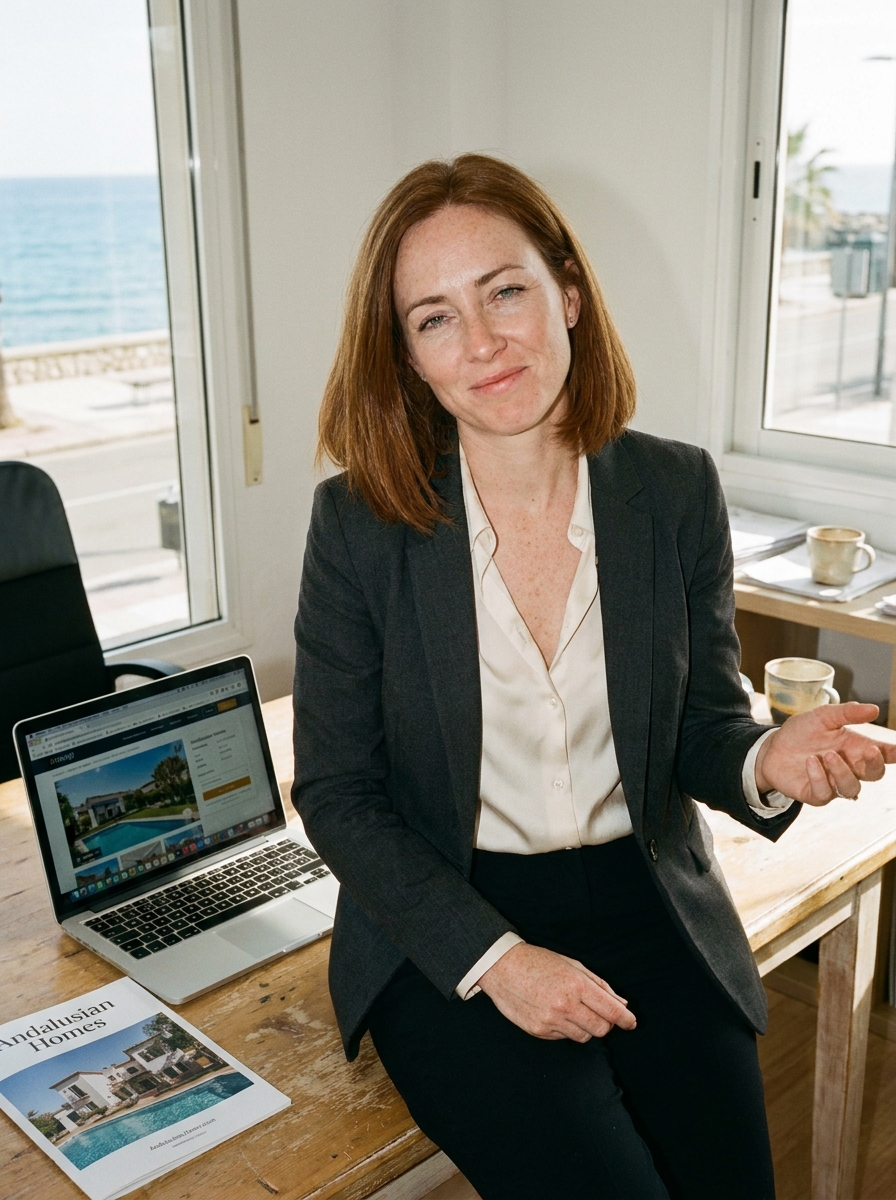
With years of experience, Emma Whitfield expertly guides English-speaking clients through the intricacies of the Spanish property market. Her dedication ensures a smooth journey.
AI-assisted multilingual representative. Your inquiry is handled by the team behind this site.
Interested?
Leave your details and we will contact you shortly with more information about this project.