
This detached villa of 220 m² stands on a 531 m² plot in an established urban district of Alicante city, roughly two kilometres from the nearest beaches. The property offers three bedrooms, four bathrooms and parking accommodation, and was completed in 1970 (indicative), meaning it is an existing, finished home rather than an off-plan development. The surrounding neighbourhood functions as a full-service urban environment: a supermarket at 162 metres, a pharmacy at 83 metres and a hospital within 1.5 kilometres. With fifty public transport lines and stops in the area, daily life here does not depend on a car, although one adds convenience for regional trips.
Key characteristics of location, homes, project phase and points of attention.
The property sits within the built-up area of Alicante, capital of the province of the same name, at approximately 35 metres above sea level on flat terrain. Platja del Cocó lies about 2 km away, with further beaches and the city marina within a short radius. The location combines urban density with coastal proximity, rather than offering a secluded or rural setting.
The villa provides 220 m² of floor space across three bedrooms and four bathrooms, with private outdoor space including a pool and garden as described. The configuration suits households seeking single-storey-plus-terrace living typical of Mediterranean villas, or those wanting ground-level bedrooms and generous bathrooms. The plot allows on-site parking for multiple vehicles.
The build status is complete, with an original completion year of 1970 (indicative). This is therefore a resale property with decades of prior use, not a new construction with developer guarantees. Interior photography indicates renovated bathrooms and modernised finishes, though the structural fabric dates from the original construction period and buyers should verify renovation records.
The property does not offer new-build certification, modern energy performance documentation by default, or a contemporary construction warranty. The 1970 build date (indicative) means the dwelling predates current building regulations. Energy efficiency labelling is not specified in the available data. There is no mention of communal facilities such as a gym or concierge, as the plot is private.
This property fits a buyer profile that prioritises a finished, move-in-ready villa without a construction or waiting period. The furnished delivery and built-in appliances reduce the practical friction of relocating from abroad, which matters to international buyers arriving from Northern Europe, North America or elsewhere who want to occupy the home within weeks rather than years. The configuration, three bedrooms with balconies, four bathrooms, private pool, parking for three cars, matches households that host guests regularly or want bathroom capacity beyond the bedroom count. Four bathrooms for three bedrooms also supports multi-generational use, where an en-suite arrangement allows separate household rhythms under one roof. The location works best for those who want city infrastructure within walking distance: schools, hospital, supermarkets and extensive public transport reduce dependence on driving, a meaningful difference from outlying coastal urbanisations. It is less suited to buyers seeking rural quiet, sea views from every window or a gated resort environment; the setting is an established city neighbourhood two kilometres from the sand. Buyers focused on new-build energy performance should also note the 1970 construction date (indicative) and verify the scope and permits of any renovations.
The photographic record shows a modernised interior: a marble bathroom with contemporary vanity and shower fitments, a bedroom with modern lighting design, and a floorplan showing terraces integrated with the pool and driveway layout. The listing describes an open-plan kitchen-living arrangement with large south-facing windows and a marble fireplace, three bedrooms with balconies, and four completed bathrooms. Delivery is stated as fully furnished with built-in appliances. Two qualifications apply. First, the original completion year of 1970 (indicative) means the visible finish reflects renovation rather than original construction; the structural frame, plumbing routes and possibly the electrical backbone predate current technical codes unless documented otherwise. Buyers should request the renovation history, licences and any installation certificates. Second, the energy performance certificate is not specified in the available data; for a property of this age, heating and cooling systems, insulation and glazing performance deserve specific inspection. The pre-installation for an electric vehicle charger indicates some modernisation of the electrical system, and a public charging point stands within 300 metres of the address. The outdoor works, a 9 x 4 m infinity-style pool, barbecue area and landscaped garden with mature palms, represent a further layer of investment. The optional rooftop solarium is a separate item; its status (included or excluded) should be confirmed in writing.


The asking price is €960,000 for the completed villa, delivered furnished with built-in appliances and pre-installation for an electric vehicle charger. Within the wider comparable set, nearby options such as apartments in Torrevieja start from €160,000 and €169,000, and a development at Urbanización El Raso from €227,000, however these are apartment products in different towns and are not direct substitutes for a detached villa with private pool in Alicante city. As a single, completed resale property, there is no phased pricing or unit variation; the price applies to the dwelling as listed.
Daily life around this villa follows an urban Mediterranean rhythm rather than a resort one. The neighbourhood is dense and provisioned: the analysis of a two-kilometre radius records 271 restaurants, 141 cafés, 55 pharmacies, 64 banks and 11 schools, alongside a park. In practical terms, groceries are a two-minute walk, a pharmacy is closer still, and hospital care is under two kilometres away. This density cuts both ways: everything is close, but the setting is unmistakably a working city district of a municipality with over 350,000 inhabitants, not a quiet coastal enclave. The villa itself is oriented around private outdoor living. The plot of 531 m² carries a 9 x 4 m pool, a barbecue area, parking for three cars and mature planting, meaning the household's principal leisure space is its own garden rather than shared grounds. South-facing glazing in the living areas supports winter light, and an optional rooftop solarium extends usable space with views towards the sea. With the flat terrain (roughly 1.5% gradient towards the coast) and 3,873 historical sunshine hours per year, the pool and terraces will be genuinely usable for most of the year, not only in August. The five-month swim season, defined by water temperatures of 20°C or above, runs roughly from late May into October.
The neighbourhood operates as a full urban district of Alicante. A supermarket is 162 metres away and a pharmacy 83 metres, placing daily essentials effectively at the doorstep. Hospital care sits within 1.5 km, and eleven schools fall inside a two-kilometre radius, which supports year-round family residence rather than purely seasonal occupation. Public transport coverage is substantial: fifty lines serve the municipality with fifty stops recorded in the area, meaning the city centre, the marina and the beaches can be reached without driving. The density has a behavioural consequence. With 271 restaurants and 141 cafés within two kilometres, the area is active and provisioned but not tranquil in the way outlying coastal urbanisations are. Noise, traffic and pedestrian volumes follow city patterns. At the same time, the flat terrain (about 1.5% slope towards the coast, at 35 m elevation) makes walking and cycling realistic: the climb to Mirador del castillo at 0.9 km or the sports centres at 0.6–0.9 km involves no significant gradient. Sports infrastructure is close at hand, including martial arts facilities, the Polideportivo de San Blas and a high-performance training centre, plus Marina Alicante one kilometre away for water-based activity.
The map places the villa in central Alicante, roughly two kilometres from the coastline and one kilometre from the marina, with the castle viewpoint under one kilometre to the north. Alicante-Elche airport lies west of the city. Distances shown are straight-line measurements.

Approximate area · exact address shared on request
Alicante is the capital of its province, the second-largest city in the Valencian Community with 358,608 inhabitants (2024; INE records 366,221 for 2025) and the tenth-largest in Spain. Within the regional context, this positions the property in a genuine city rather than a resort town: the comparable developments listed in Torrevieja and El Raso sit in smaller, more tourism-oriented municipalities 40–60 km south. For the buyer, the trade-off is straightforward, urban services, a major airport at 9 km and year-round economic activity, against a busier and denser everyday environment than the coastal urbanisations further south.
Beaches: Platja del Cocó at 2.1 km, Cala de la Sangueta at 2.4 km and Platja de Sant Gabriel at 2.5 km (straight-line); four Blue Flag beaches (Postiguet, Saladar-Urbanova, Sant Joan and Tabarca) serve the municipality. Airport: Alicante-Elche (ALC) is approximately 9 km in a straight line, one of the shortest airport distances available in any Spanish coastal city, with Valencia at 127 km and Málaga at 400 km. Golf: Club de Golf El Plantío at 6.1 km, Bonalba at 11 km and Alenda at 15 km. Daily needs: supermarket at 162 m, pharmacy at 83 m, hospital at 1.5 km, EV charging at 291 m. A car is convenient but not strictly necessary given the transport density.
| Beach Distance | 2 km |
| Alicante-Elche (ALC) | 9 km |
| Valencia (VLC) | 127 km |
Source: OpenStreetMap, Google Maps


Alicante records 3,873 historical sunshine hours per year and a mean annual temperature of 19.0°C, within a range of roughly 12–26°C across the seasons. The swim season, based on sea temperatures of 20°C or above, lasts about five months. The property stands at 35 metres above sea level with a gradient of roughly 1.5% towards the coast, effectively flat terrain, which affects both walking comfort and garden usability. The single recorded park within two kilometres suggests green space comes mainly from private plots and the coastal fringe rather than large urban parks; the listing's reference to a pine park in front of the property supplements this. The Mediterranean climate means mild winters, warm dry summers and outdoor living possible for most of the year.
Source: Open-Meteo (2020–2025 average)
The municipality holds four Blue Flag beaches: Postiguet, Saladar-Urbanova, Sant Joan and Tabarca, the latter on an island reachable by boat, giving a protected marine reserve within day-trip range. The nearest sand to this address is Platja del Cocó at 2.1 km, followed by Cala de la Sangueta and Platja de Sant Gabriel. Golfers have three courses within fifteen kilometres: El Plantío (6.1 km), Bonalba (11 km) and Alenda (15 km), covering a range of playing levels. Waterfront recreation centres on Marina Alicante, one kilometre away, and Club Náutico Costablanca at 4.7 km. For land sport, the martial arts centre, the San Blas municipal sports complex and a high-performance training facility all sit within one kilometre.
Source: Blue Flag 2026, OpenStreetMap

Alicante or Alacant is a city and municipality in the Valencian Community, Spain. It is the capital of the province of Alicante and a historical Mediterranean port. With a population of 358,608 as of 2024, it is the 2nd-largest city in the Valencian Community and the 10th-largest in Spain.
| Month | Avg. Temperature | Rainfall |
|---|---|---|
| January | 11.9°C | 24 mm |
| February | 12.4°C | 17 mm |
| March | 14.4°C | 29 mm |
| April | 16.5°C | 29 mm |
| May | 19.6°C | 19 mm |
| June | 23.4°C | 8 mm |
| July | 26.0°C | 3 mm |
| August | 26.5°C | 13 mm |
| September | 23.7°C | 51 mm |
| October | 19.9°C | 33 mm |
| November | 15.4°C | 33 mm |
| December | 12.7°C | 25 mm |
Flat
Ref: VL438210
Source: Wikipedia, Wikidata, INE, Junta de Andalucía
Set against the wider Costa Blanca market, this villa occupies a different segment from the comparable projects listed. The Palangre Beach and Sun & Center developments in Torrevieja, starting at €160,000–€169,000, and Oasis Laguna 2 at El Raso from €227,000, are apartment products in smaller, tourism-weighted municipalities south of Alicante city. A €960,000 detached villa with a private pool in the provincial capital is not competing on price per square metre with those units; the relevant comparison is with other detached stock in central Alicante and its immediate suburbs, where the combination of plot size, four bathrooms and walkable urban infrastructure is comparatively scarce. The location trade-off deserves attention. Torrevieja and El Raso offer quieter, lower-density environments with salt lagoons and stronger seasonal rental dynamics, but their permanent infrastructure, hospitals, international schools, cultural amenities, is thinner, and airport transfer times are longer. Alicante city inverts this: the airport is 9 km away, a hospital 1.5 km from the door, fifty bus lines serve the municipality, and the city of over 350,000 people functions twelve months a year rather than peaking in summer. The cost is density: the neighbourhood records 271 restaurants within two kilometres, with the traffic and activity that implies. For value considerations, the provincial median income of €15,750 provides context for local purchasing power, while the property's 3,873 annual sunshine hours and five-month swim season are consistent with the wider Costa Blanca. Buyers choosing this villa over the southern comparables are, in effect, paying for urban completeness and airport proximity rather than resort tranquillity, a decision that depends on whether the household plans year-round residence or seasonal use.
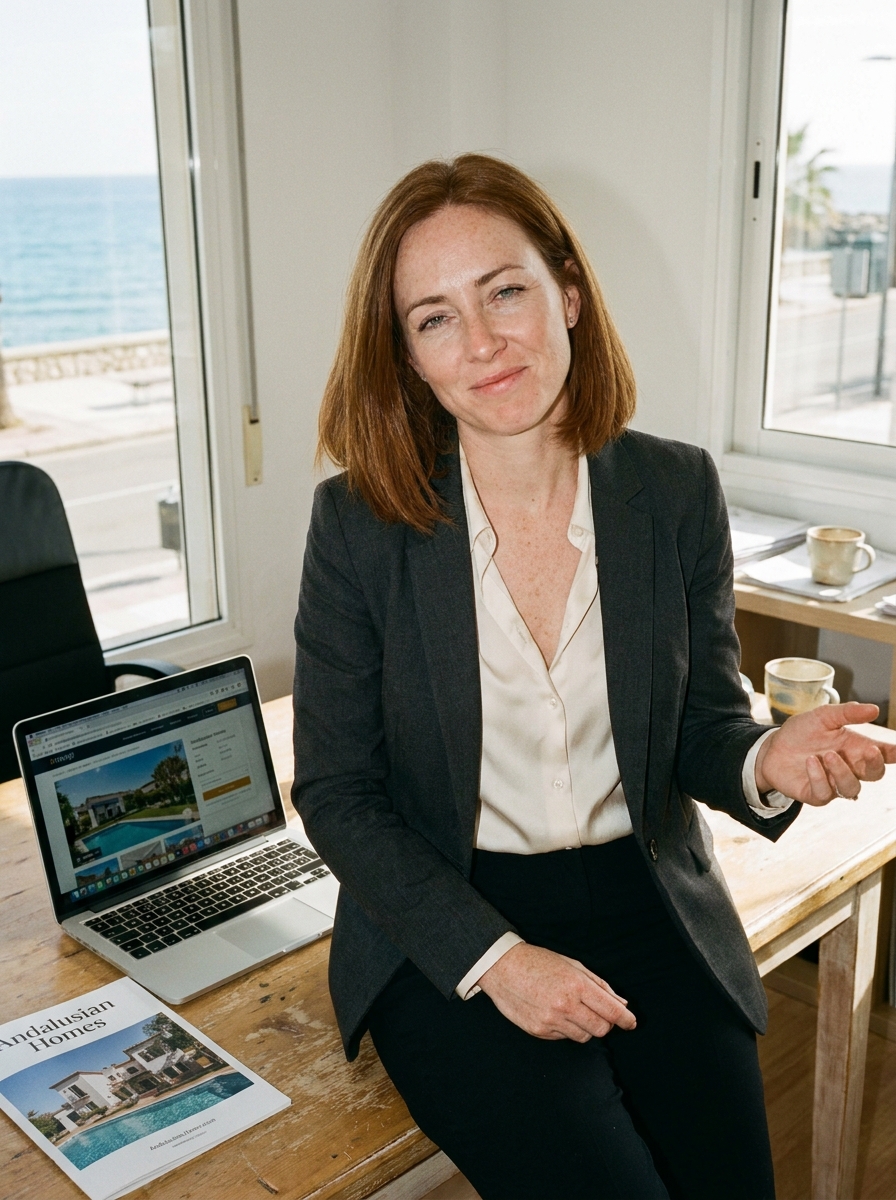
With years of experience, Emma Whitfield expertly guides English-speaking clients through the intricacies of the Spanish property market. Her dedication ensures a smooth journey.
AI-assisted multilingual representative. Your inquiry is handled by the team behind this site.
Interested?
Leave your details and we will contact you shortly with more information about this project.



 NL
NL EN
EN DE
DE FR
FR ES
ES IT
IT PT
PT DA
DA SV
SV NO
NO FI
FI PL
PL ZH
ZH RU
RU AR
AR TR
TR CS
CS RO
RO HU
HU LT
LT ET
ET BG
BG HR
HR SK
SK HE
HE JA
JA KO
KO HI
HI UK
UK SR
SR EL
EL SL
SL LV
LV ID
ID